They say you don't choose Arch, Arch chooses you. Well, for me I didn't even know Arch existed when I first stepped foot on Linux territory.
The first switch
I recall it all started with curious me following a WiFi hack guide on YouTube! Curiosity killed the cat for sure. What caught my attention was seeing the guy boot a full Kali Linux OS from a USB drive! I had to try that! I didn't become a master hacker, but I noticed something immediate: The system was fast, noticeably faster than my fully installed Windows setup. It didn't make sense. This was a live environment running off a USB, yet it felt smoother than what I had been using every day?
Digging a bit deeper, learned I could dual-boot Linux with my Windows! And considering Kali Linux was clearly optimized for hacking, my first stop for a Linux install was UBUNTU. Did my first dual-boot install, but the Ubuntu "default" life wasn't for me. I became a regular on DistroWatch, falling down the rabbit hole of distro-hopping. I tried almost everything! I mean, I even tried Deepin OS. But there was always a catch: I hated how most distros handled software installations.
The Windows Killer
Then came Manjaro Linux. This was the turning point. It was the first Linux OS stable enough and "right" enough that I finally did the unthinkable. I wiped Windows from my disk for good. No more dual booting. With Manjaro, installing software was a breeze. And that got me hooked.
The Desktop Environment
One thing you learn quickly in the Linux world is that Linux itself is just a kernel. The invisible engine under the hood. To actually interact with it, you need a Desktop Environment (DE). This is your cockpit, and choosing the right one is a very personal decision.
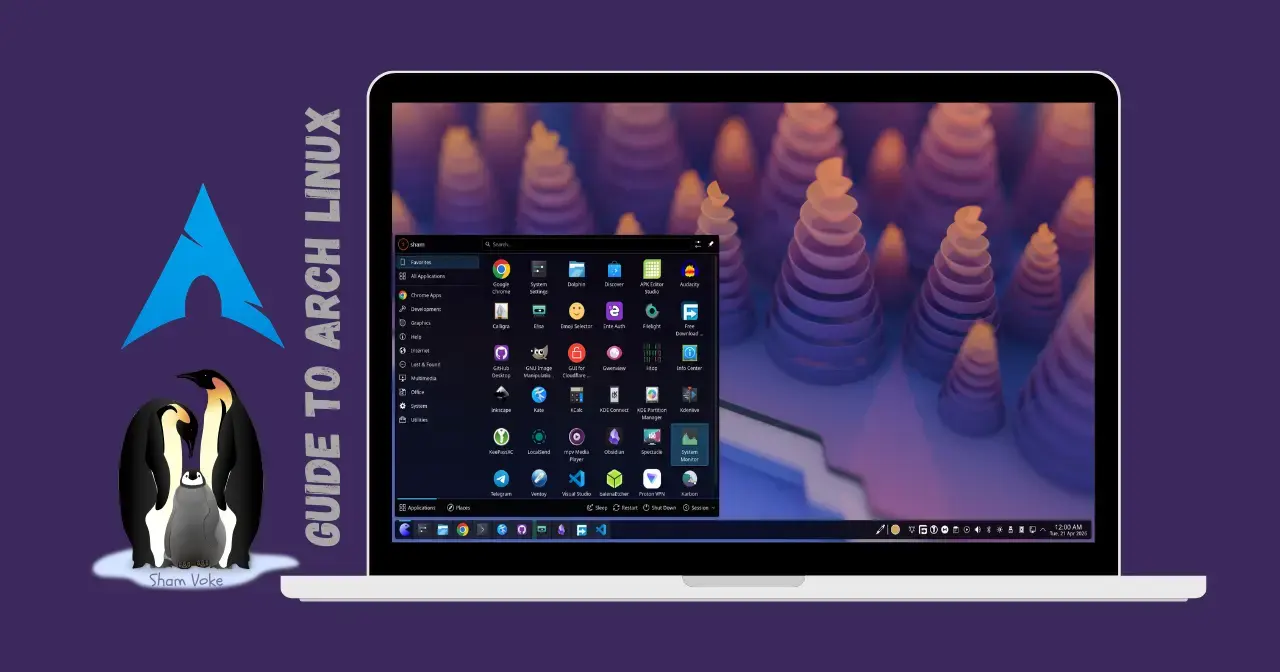
At the time, I was a GNOME devotee. I loved how minimal it felt. Clean, distraction-free, just enough to get things done. On the other hand, I couldn't stand KDE Plasma. It felt like too much, too many options, too many settings, too much everything.
Or so I thought...
The second switch
Later on, I found out Manjaro is based on Arch Linux, and once again, curiosity got the better of me. The plan was simple in my head, try Arch, experience it, then go back to my "stable Manjaro."
That plan didn't go as planned.
From the very first boot, Arch felt different. It's hard to explain unless you've experienced it yourself, but it felt closer to the bare metal hardware. Like there was less between me and the system. No extra layers, no unnecessary decisions made for me. Just a system, and me in control.
That was it.
Arch became my main OS from the first boot, and I never looked back!
The third switch
As I got deeper into Arch, something else shifted.
GNOME started to feel limited.
I had built up a collection of 'my favorite' GNOME extensions just to make it behave the way I wanted. It worked, but it didn't feel natural anymore. So I gave KDE another shot.
And this time, everything clicked!
Everything I had been trying to achieve with extensions in GNOME was already there in KDE. Built in. Ready to use. Ironically, I ended up loving KDE for the exact same reason I once hated it, it had too many options. Only now, those options felt like freedom.
The final switch
I'll be honest. I only did a full manual install once. I respect the process, but I value efficiency. After that initial install, I went hunting for a 'better' way to install arch. The result of that hunt was archfi. A script I found on GitHub by a guy named MatMoul. For me, both the script and its creator were criminally underrated. I could install Arch Linux with two simple terminal commands.
- to download the script
curl -LO matmoul.github.io/archfi
- to launch Archfi!
sh archfi
Then, the Arch team introduced their own official installer.
archinstall
I have watched it grow over time. Eventually, the official script matured. One command, and I was in.
Simple.
The Arch team
The thing about Arch team is they release an updated .iso on the 1st of every month! 12 times a year! And one thing about me is... I love updates!
For a long time, I had a habit: by the 3rd of every month, I was doing a fresh install. I know, I know. “you can just run
pacman -Syu!” but where is the fun in that?
I started reinstalling Arch as a hobby. Every month. Sometimes more. Each install became an experiment. Different file systems, different boot-loaders, different configurations.
Four file system options? That meant four installs. Bootloaders? Another round. Zswap enabled, disabled, tested again. I kept going, not out of necessity, but pure curiosity.
No more switch
Eventually, all that experimentation led me to a setup that felt right.
GRUB as my boot-loader. XFS for the file system, incredibly fast on SSD btw. No zswap, opted for manually configured swap file. Pulse-audio for sound. X11 for display manager, at least for a long time, until recently when all devs decided X11 was ancient and Wayland is the future. And KDE Plasma as my desktop environment.
As far as am concerned, It isn't just a setup.
It is something I have built, tested, and refined over time.
An ocean
And then there's the AUR - Arch User Repository.
The AUR changes everything.
It's like an ocean of software. Almost anything I needed was there, ready to install. It made other distributions feel limited in comparison. Feeling like toys if you ask me.
Well, almost everything.
Adobe still hasn't made its way there 😄 Who needs Adobe anyway, I DO!
The map
And finally, the Arch Wiki.
At some point, it stops feeling like documentation. It feels like something else entirely. Every problem I ran into, it already had the answer. Clear, detailed, and reliable.
It became my go to for everything Arch.
The destination
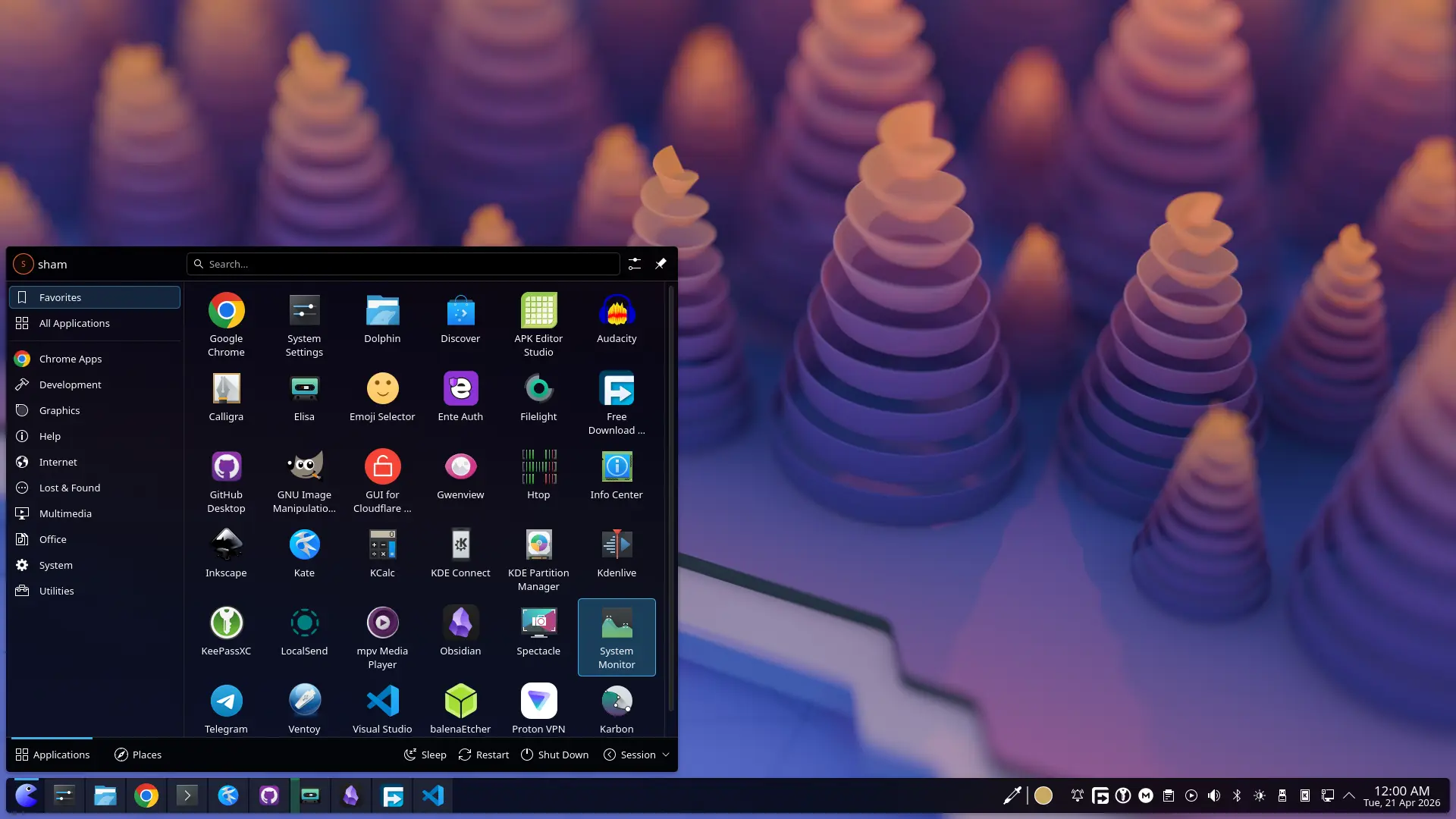
I've spent years breaking, re-installing, and optimizing Arch so you don't have to. I've finally settled on my "perfect" setup.
Notable Distros
Along the journey, there are some distros that earned my respect, worth checking out:
-
Linux Mint: This one is so stable it almost made me switch! Based on UBUNTU but it beats UBUNTU any day and everyday! Went back to Arch because... AUR.
-
XeroLinux: A hidden gem I found in the wild. Based on Arch. Steel solid!
-
CachyOS: A new player on the scene. Based on Arch. Rock solid.
Stay tuned for my next post, where I'll drop the full, step-by-step guide on how I install my Arch Linux daily driver. Plus a few tricks I have learned along the way!
Stay Curious,
Sham.